
Warehouse floor cleaning decisions usually fail in two places:
You buy based on a spec sheet (path width, “sq ft/hour”), then reality (tight aisles, dumping, dust control, charging, service delays) crushes productivity.
You treat dust like a housekeeping problem, when it’s often a safety, asset-protection, and compliance problem.
This buyer’s guide is written for manufacturing and warehouse operations managers in the US who are already comparing machines. It gives you a practical framework to pick an industrial floor sweeper that fits your layout, debris, cleaning window, and service constraints—without hype.
Start with a 10-minute needs assessment (before you look at models)
A sweeper that looks perfect online can be wrong for your building. Capture these six inputs first:
Area to sweep per shift (not total facility size): focus on traffic lanes, docks, pack areas, and dust-heavy zones.
Debris mix (top 3): fine dust, pallet chips, shrink wrap, cardboard scraps, metal shavings, outdoor grit, etc.
Your three “hard zones”:
narrowest aisle or doorway
tightest turn
most dust-sensitive area (product quality, electronics, EHS)
Cleaning window: minutes available and how many shifts per day.
Indoor air / dust risk: what dust is present, and whether it needs engineered control.
Support reality: can you tolerate multi-day downtime waiting for a brush motor, filter, or control board?
If you want a more structured version of this assessment, SUNBON’s internal guide Electric Sweepers for Manufacturing Facilities: A Buyer’s Guide is a useful checklist-style read: electric sweepers buyer’s guide.
Sweeper vs. scrubber: confirm you’re solving the right problem
A floor sweeper is built for dry debris and dust control. A scrubber is built for wet soil removal and water recovery. Many sites need both, but not always at the same time.
If your main issue is dust, packaging debris, and tracked-in grit, start with a sweeper.
If your main issue is oil/grease films, sticky residue, or stain removal, you’ll likely need a scrubber (and usually sweep first).
For a general, brand-neutral overview of machine categories, Grainger’s guide is a solid baseline: How to Choose the Right Floor Cleaning Machine for Your Facility.
Walk-behind vs. ride-on floor sweeper: choose based on layout and labor, not pride
This is the decision most teams overthink.
Choose a walk-behind floor sweeper when
Aisles and turns are tight, or obstacles are constant (pallet staging, mixed traffic, narrow doorways).
You’re sweeping smaller zones or only a few times per week.
You need simple operation and easy storage.
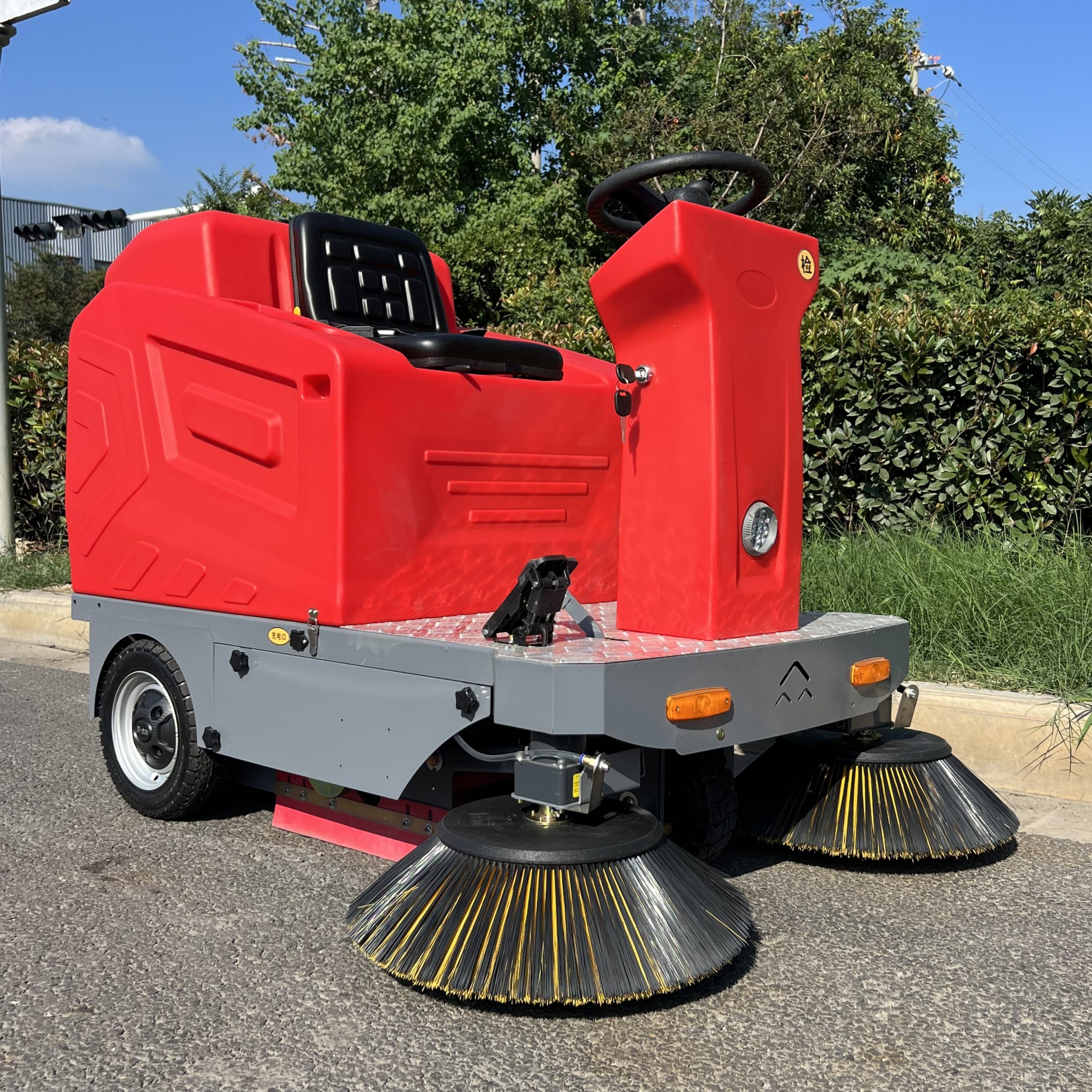
Choose a ride-on floor sweeper when
You have large open areas (wide aisles, long lanes, docks, staging).
Sweeping is daily and labor hours are meaningful.
Operator fatigue is limiting consistency.
One practical summary of the productivity vs. maneuverability trade-off is in Total Industries’ walk-behind vs. ride-on comparison. Treat any percentage improvement claims as directional—not universal—because your layout can dominate the result.
Pro Tip: If you can’t run the intended sweeper through your narrowest aisle and tightest turn during a demo, it doesn’t matter what the spec sheet says.
Dust control is an EHS decision: what to verify (not what to assume)
For many warehouses, “dust control for floor sweepers” is the real reason to mechanize sweeping.
What good dust control looks like in practice
Dust stays in the machine, not in the air—especially during turns and dumping.
Filters can be cleaned or replaced without creating a dust cloud.
The system is designed to perform even as filters load (some machines use filter shaking/cleaning mechanisms).
HEPA isn’t a checkbox
HEPA is commonly defined as 99.97% filtration efficiency at 0.3 microns. That’s meaningful only if the machine is designed so airflow, seals, and maintenance routines actually support that performance.
If a vendor claims “OSHA-compliant dust control,” ask what that statement is based on and what filtration class the machine is designed to meet. Some manufacturers describe their dust control approach in detail, such as in PowerBoss’ dust control overview. Use this as a question framework—even if you buy elsewhere.
⚠️ Warning: If your site has hazardous dust exposure (including silica concerns), equipment selection should be reviewed with EHS. A sweeper choice can become a compliance issue, not just an operations choice.
Productivity: why “sq ft/hour” is usually wrong in your building
Published productivity is typically theoretical—based on sweep path width and travel speed. Your actual throughput is shaped by:
obstacles and cross-traffic
turning frequency
how often the hopper needs dumping on your dirtiest day
dust control performance (slowing down to keep dust contained)
operator behavior and training
The buyer-friendly move is to ask vendors to estimate “effective productivity” based on your real route—and then prove it in a demo.
A simple planning formula
Planned sweep time per shift ≈ (Area to sweep) ÷ (Expected effective area per hour)
Expected effective area per hour is almost always lower than the brochure number.
If you want a broader, operations-minded framing of how machine type and debris affect selection, Tennant’s selection guide is a helpful reference point: floor cleaning machine selection guide.
Warehouse floor sweeping: build a program, not a one-off task
Warehouse floor sweeping works best as a repeatable program: defined routes, a simple checklist, and basic auditing (did we hit the dust zones? did dumping stay clean? did operators service filters?). When you evaluate a sweeper, you’re also evaluating whether it can support that program without shortcuts.
If you only evaluate 5 things, evaluate these:
1) Route fit (clearance + turning)
Can it pass your narrowest choke point with margin?
Does the turning radius work at the ends of aisles?
Can it operate safely around forklifts and pedestrians?
2) Debris pickup match (fine dust vs bulky debris)
Fine dust and lightweight debris usually demand better dust control and consistent sealing.
Bulky debris (chips, wrappers, packing scraps) stresses the broom system and hopper capacity.
3) Hopper capacity and dumping workflow
Don’t just ask “how big is the hopper?” Ask:
How often will it need dumping on the dirtiest day?
Can one operator dump it safely and cleanly?
Where does the dust go during dumping?
4) Power and runtime (battery, charging, shift coverage)
Battery machines are attractive for indoor use (no emissions at point of use), but your program needs a plan for:
charging time vs cleaning window
battery aging (runtime drops over time)
who is responsible for charging discipline
5) Serviceability and support (the hidden TCO driver)
A cheaper machine that sits idle waiting for parts is expensive.
Ask:
Which wear parts are routine (main broom, side brooms, filters) and how often?
What are typical lead times for common spare parts in the US?
What does warranty actually cover, and what’s excluded?
SUNBON publishes buyer-oriented sweeper guidance that mirrors these criteria (useful even if you compare multiple suppliers): How to Choose the Best Floor Sweeper for Commercial and Industrial Cleaning.
Deal-breakers and red flags (print this before demos)
Deal-breakers
Vendor avoids your dustiest zone or your tightest aisle during demo.
Filter service looks complex or messy—meaning it won’t happen consistently.
Dumping workflow requires two people or creates a dust cloud.
No clear path to US spare parts and service response.
Red flags
“Maintenance-free” language.
Dust control claims with no explanation of filtration class, sealing, or service procedure.
Productivity claims presented without a route-based utilization factor.
A practical sweeper demo checklist (Ops + EHS + Maintenance)
Bring the people who will live with the decision.
Route test: tightest aisle + tightest turn.
Dust test: sweep the dustiest area at a realistic speed; watch for airborne dust.
Pickup test: run common debris and worst-case debris.
Dump test: time it; observe mess and ergonomics; confirm where dust goes.
Service test: inspect access to filters and brooms; ask for a “jam clearing” walkthrough.
Support test: ask the vendor to explain parts stocking, lead times, and service workflow in the US.
If your team is also evaluating “smart” or connected equipment, this internal overview can help you separate useful telemetry from gimmicks: Smart Cleaning Equipment: A Buyer’s Guide for Factory & Warehouse Floor Care.
A simple 5-year TCO framework (no spreadsheets required)
You don’t need perfect numbers—just honest assumptions.
Costs to capture
purchase price (including required options)
consumables (brooms, filters) and their replacement frequency
battery replacement assumptions (if applicable)
maintenance labor time (weekly/monthly)
downtime cost (labor disruption + missed cleaning window)
Benefits to capture
labor hours saved per week vs your current method
fewer safety incidents / less dust-related cleanup (documented internally when possible)
reduced wear on floors and material handling areas (again: use your internal data)
The goal is not a perfect ROI claim. The goal is to avoid buying on price tag alone.
Where SUNBON fits (and how to use this when comparing suppliers)
SUNBON (Global Cleaning Equipment) is a factory-direct supplier with a broad portfolio across floor cleaning categories. If you’re shortlisting suppliers, use the vendor questions above and ask any manufacturer to show evidence for:
dust control design and filtration options
route-fit suitability
consumables and service plan in the US
As one reference point for ride-on sweepers, you can review SUNBON’s product listing here: SBN-25000AW Industrial Ride-on Sweeper.
Next steps
If you share these six variables—(1) area to sweep per shift, (2) debris mix, (3) narrowest aisle/doorway, (4) tightest turn, (5) dust sensitivity, and (6) cleaning window—I can help you translate them into a shortlist of must-haves, deal-breakers, and a demo scorecard you can hand to procurement.





