
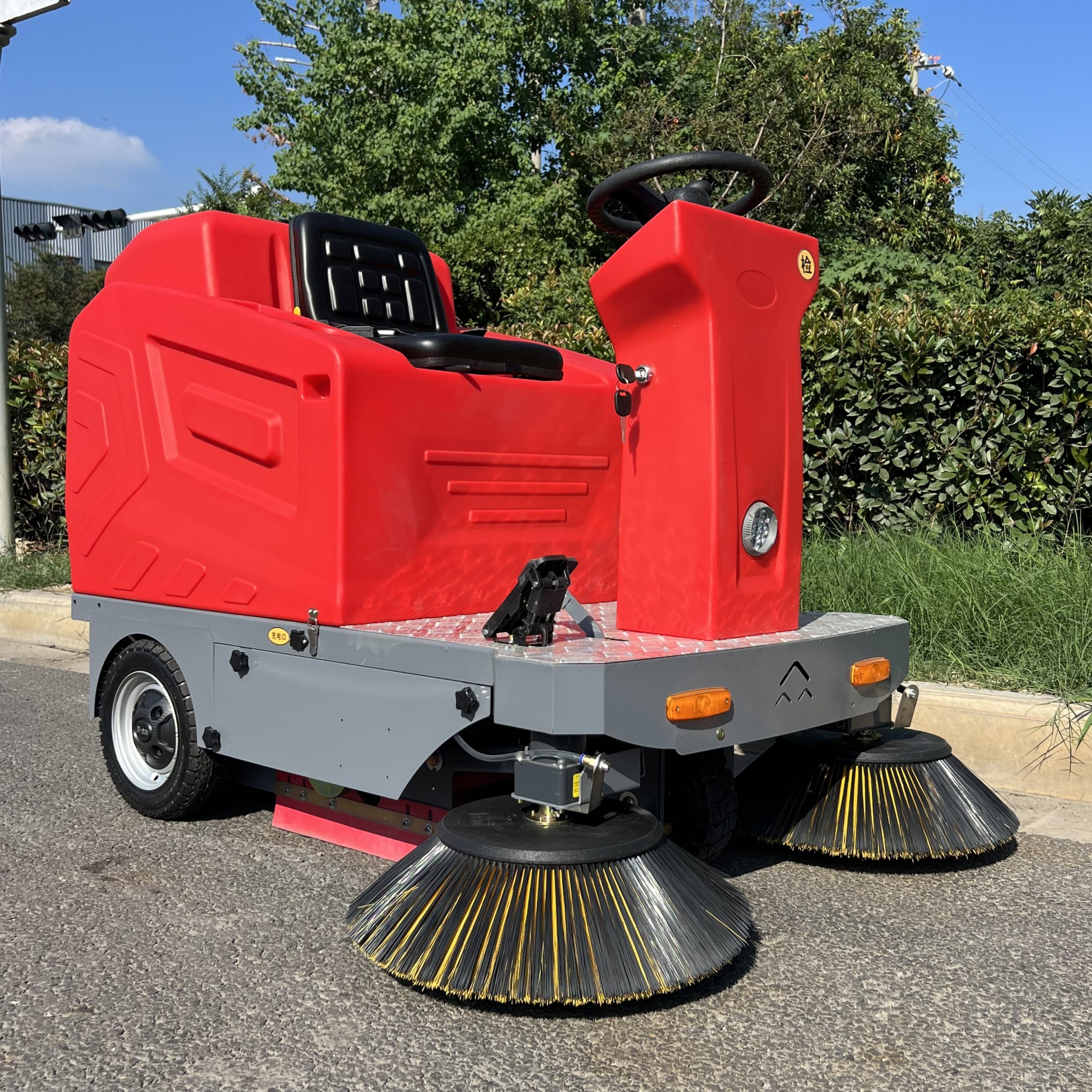
Maintaining clean, dust-free floors in large-scale warehouses, logistics hubs, and manufacturing facilities is no longer just a housekeeping detail—it is a core driver of operational safety, machinery longevity, and labor productivity. Manual sweeping with brooms is notoriously slow, labor-intensive, and airborne-dust prone, kicking fine particulates back onto high-bay rack inventory and sensitive machinery.
Investing in a dedicated commercial or industrial warehouse sweeper transitions facility maintenance from a recurring labor bottleneck into a streamlined, automated process. However, choosing the wrong floor cleaning machine—whether under-sizing a sweeper for a vast distribution center or buying a unit with inadequate dust filtration—can lead to expensive downtime, rapid battery degradation, and poor cleaning results.
This comprehensive buyer’s guide breaks down the technical selection criteria, facility sizing formulas, battery architectures, and labor cost ROI calculations necessary to choose the right warehouse floor sweeper for your facility.
Assessing Your Facility: 4 Operational Variables Before Choosing a Machine
Before evaluating specific machinery models or sweeping width specifications, facility operations managers must audit their physical layout and daily traffic patterns. Machinery sizing should be driven by real operational routes rather than gross building square footage alone.
1. Sweeping Route & Aisle Clearance
A common procurement mistake is purchasing the widest machine available to maximize square footage coverage, only to discover it cannot navigate narrow rack aisles or tight staging areas.
Narrow Aisle Storage (8–10 ft clearance): Requires compact walk-behind electric sweepers or ultra-maneuverable ride-on units with tight turning radiuses (under 60 inches) to sweep between racking without clipping uprights.
Open Distribution & Bulk Staging (12+ ft aisles): Favors high-capacity ride-on warehouse sweepers featuring dual side brooms and sweeping paths ranging from 45 to 65+ inches for high-speed coverage.
Doorway & Elevator Thresholds: Measure the narrowest doorway, ramp incline, and elevator width on the cleaning path to ensure seamless transition between storage bays.
Pro Tip: Map your facility’s daily cleaning route into two distinct zones: high-traffic primary aisles cleared during shift changes, and micro-zones (pack lines and pallet assembly) swept during active shifts.
2. Debris Profile & Dust Containment
Not all warehouse dirt is created equal. The type of debris generated on your floor dictates the required brush deck configuration, hopper volume, and vacuum filtration system.
Fine Airborne Dust (Concrete dust, flour, silica, paper lint): Demands multi-stage vacuum filtration systems (typically 5 to 12 m² of filter surface area) with automatic electric filter shakers to prevent filter clogging. According to OSHA Indoor Air Quality Guidelines, controlling airborne particulate matter in enclosed industrial spaces is essential for worker respiratory health.
Bulky Packaging Debris (Pallet chips, shrink wrap scraps, cardboard corner posts): Requires wide flap intakes and high-torque cylindrical main brooms capable of trapping bulky litter without clogging the hopper flap.
Heavy Industrial Grit (Metal shavings, gravel, sand at loading docks): Calls for reinforced steel hopper construction and heavy-duty main brooms with adjustable brush pressure.
3. Cleaning Window & Hourly Coverage
Calculating your required cleaning capacity ensures your equipment finishes the job within designated operational windows:
Required Coverage Rate (sq ft/hr) = Sweeping Route Area (sq ft) / Available Cleaning Time (hours)
For example, clearing a 100,000 sq ft logistics floor within a 2-hour window during shift change requires a machine with an effective practical coverage rate of at least 50,000 sq ft/hr.
4. Operator Training & Usability
High turnover in janitorial and warehouse operations means complex machinery leads to operator error and accidental damage. Modern electric warehouse sweepers feature single-button start controls, intuitive steering, and clear battery level telemetry to minimize operator training time to under 15 minutes.
Walk-Behind vs. Ride-On Warehouse Sweepers: Technical Comparison
The primary structural decision when sourcing a warehouse sweeper is selecting between pedestrian-operated walk-behind units and rider-operated machines.
Evaluation Dimension | Walk-Behind Electric Sweeper | Ride-On Industrial Sweeper |
|---|---|---|
Typical Sweeping Path | 28 inches to 40 inches | 40 inches to 65+ inches |
Theoretical Coverage Rate | 25,000 – 45,000 sq ft/hr | 65,000 – 180,000+ sq ft/hr |
Ideal Facility Floor Space | Under 50,000 sq ft | 50,000 to 500,000+ sq ft |
Aisle Clearance Needed | 6 ft to 8 ft | 8 ft to 12+ ft |
Debris Hopper Capacity | 10 to 20 gallons (Manual dump) | 25 to 60+ gallons (High hydraulic dump) |
Operator Fatigue Index | Moderate (Walking 3–5 miles/shift) | Low (Seated ergonomic operation) |
When applying a structured industrial floor sweeper selection framework, facility managers operating facilities under 40,000 sq ft often find walk-behind sweepers provide optimal agility around packing stations.
Conversely, for mid-to-large distribution centers exceeding 50,000 sq ft, reviewing a comprehensive ride-on warehouse sweeper guide demonstrates that rider sweepers increase cleaning speed by over 60% per shift while eliminating operator exhaustion.
Battery Architecture & Power Systems: Lithium-Ion vs. Lead-Acid
The power system of an electric warehouse sweeper directly governs machine uptime, daily maintenance overhead, and total lifetime battery replacement costs.
Lithium-Ion Battery Technology (The Modern Standard)
Opportunity Charging Support: Allows operators to top off battery charge during 15-minute lunch or shift breaks without degrading cell lifespan, enabling continuous multi-shift operation.
Zero Battery Maintenance: Eliminates acid spill risks, terminal corrosion, and daily distilled water topping.
Consistent Power Output: Delivers steady brush speed and suction airflow even at 20% state-of-charge, unlike lead-acid batteries which experience voltage sag.
Longer Service Life: Lasts 3,000 to 4,000 charge cycles (5–8 years of industrial use), compared to 800–1,000 cycles for traditional lead-acid units.
Lead-Acid Battery Systems (Legacy Choice)
Lower Upfront Capital Cost: Reduces initial machine acquisition cost by 15–20%.
Operational Constraints: Requires an 8-hour charge cycle followed by an 8-hour cooldown period, necessitating secondary battery swap carts for multi-shift facilities.
For manufacturing plants and logistics hubs running continuous shifts, adopting advanced electric floor sweepers for manufacturing facilities equipped with maintenance-free lithium-ion packs reduces annual equipment downtime by up to 90%.
Total Cost of Ownership (TCO) & Labor ROI Framework
Equipment acquisition cost represents less than 25% of the total cost of floor care over a 5-year operating window. Labor accounts for over 65% of ongoing maintenance costs.
Labor Savings Comparison Case Study (50,000 sq ft Facility)
Manual Push Broom Sweeping:
Average sweeping speed: 3,000 sq ft/hr per worker
Total shift labor required: 16.6 labor hours
Annual labor cost (@ $22/hr, 250 days/year): $91,300
Powered Walk-Behind Sweeper (36-inch path):
Average sweeping speed: 35,000 sq ft/hr
Total shift labor required: 1.4 labor hours
Annual labor cost (@ $22/hr, 250 days/year): $7,700
Annual Direct Labor Savings: $83,600
Commercial Ride-On Sweeper (48-inch path):
Average sweeping speed: 85,000 sq ft/hr
Total shift labor required: 0.6 labor hours (35 minutes)
Annual labor cost (@ $22/hr, 250 days/year): $3,300
Annual Direct Labor Savings: $88,000
The equipment payback period for a high-quality industrial sweeper is typically achieved in 3 to 6 months purely through direct labor hour reallocation.
⚠️ Warning: Do not evaluate sweeper quotes on purchase price alone. Factor in brush wear life, filter replacement pricing, battery warranty terms, and local spare parts availability to calculate true TCO.
Red Flags to Avoid When Sourcing Warehouse Sweepers
To prevent post-purchase regret and unexpected repair expenses, watch for these common design red flags during vendor evaluation:
Undersized Vacuum Filtration Area: Machines with less than 3 m² of filter surface area for industrial applications will frequently clog when handling fine concrete dust, blowing dust back into the air.
Fragile Plastic Chassis Construction: Heavy-duty warehouse environments require powder-coated steel or rotationally molded polyethylene bumpers to withstand accidental collisions with pallet racks and forklift traffic.
Proprietary, Non-Modular Components: Avoid equipment that utilizes non-standard battery connectors or custom drive motors that force expensive OEM-only replacement parts with multi-week lead times.
Manual Hopper Emptying on Heavy Debris Machines: For hoppers exceeding 30 gallons, manual lifting poses worker back injury risks. Prioritize machines equipped with powered hydraulic high-dump systems that lift debris directly into standard waste dumpsters.
Vendor Evaluation Checklist: Factory-Direct Quality Standards
When sourcing commercial floor cleaning machinery from established global manufacturers like Sunbon, verify that the manufacturer meets rigorous production and quality assurance benchmarks:
Certified Quality Standards: Verification of CE and ISO9001 manufacturing certifications for electrical and mechanical safety.
100% Pre-Shipment Testing: Full factory testing of motor load, water suppression seals, and battery discharge performance prior to dispatch.
Modular Component Design: Standardized wear parts (main brooms, side brooms, suction skirts) designed for tool-less replacement in under 5 minutes.
Factory-Direct Technical Support: Availability of detailed spare parts catalogs, wiring schematics, and lifetime technical maintenance guidance.
Next Steps: Optimize Your Warehouse Floor Cleaning Strategy
Selecting the right warehouse sweeper requires balancing facility aisle geometry, dust filtration specs, battery runtime, and total cost of ownership. By replacing manual sweeping with an industrial electric sweeper, facility operations managers protect inventory value, comply with indoor air safety standards, and achieve rapid ROI through labor savings.
Ready to upgrade your warehouse floor care equipment? Contact Sunbon’s floor care specialists today to request customized equipment specifications, evaluate factory-direct lithium sweeper options, or calculate your facility’s exact cleaning ROI.





