
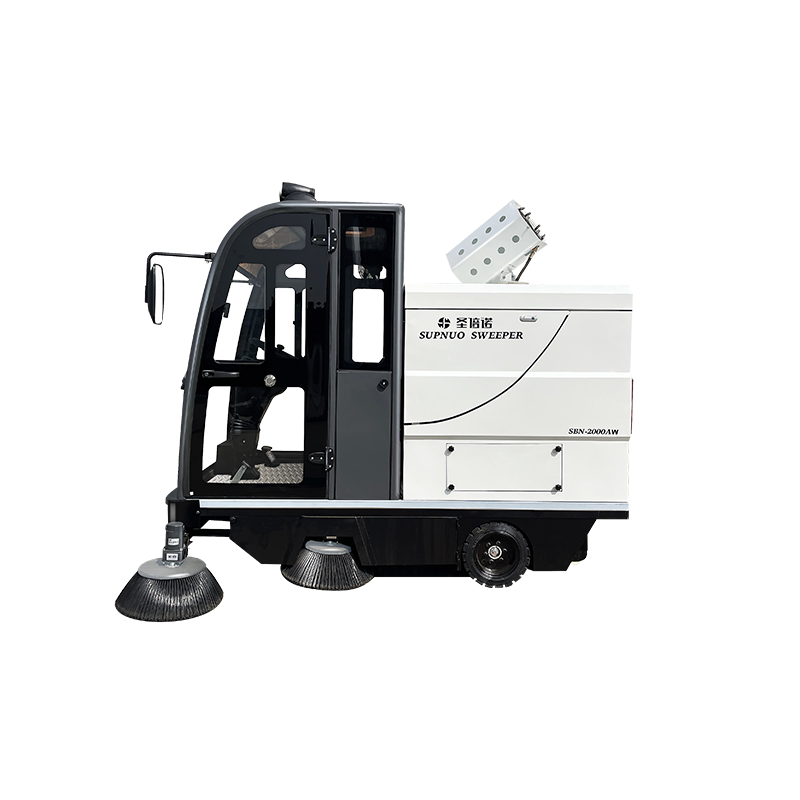
If you’re researching a floor sweeper, you’re usually trying to answer two questions at once:
Is this the right machine category for my mess and my space?
If yes, what type should I shortlist—manual, walk-behind, or ride-on?
This guide gives you a practical framework to compare options without getting pulled into spec-sheet rabbit holes.
What is a floor sweeper?
A floor sweeper is a cleaning machine designed to pick up dry, loose debris—dust, dirt, sand, leaves, and litter—using brushes (and often suction) to move debris into a hopper.
A simple rule of thumb:
If you’d normally use a broom for it, a sweeper is usually the right category.
If you’d normally mop for it, you’re probably in scrubber territory.
What this machine is used for (by environment)
Sweepers show up anywhere a team needs consistent daily cleanup without turning every pass into a manual task.
Common use cases include:
Warehouses and logistics: dust, cardboard bits, pallet debris, track-in dirt
Manufacturing and workshops: routine dry debris and dust control (context matters—see the dust notes below)
Parking garages and outdoor areas: sand, leaves, litter
Retail and public facilities: daily tidy-ups that keep entryways and aisles presentable
Schools, campuses, and hospitals: routine maintenance cleaning (often with higher sensitivity to noise and dust)
What sweepers don’t do well is deep-clean stuck-on grime, spills, or oily residues. That’s where scrubbers come in.
Floor sweeper vs scrubber (and when a combo machine makes sense)
People often lump sweepers and scrubbers together, but they solve different problems.
A sweeper is for dry debris.
A floor scrubber is for wet cleaning: it uses cleaning solution, agitation, and recovery to remove residue, grease, and stains.
For a straightforward breakdown, see The Sweeper Company’s explanation of floor scrubbers vs. sweepers.
When you should choose a sweeper
Choose this category if your main issue is:
Dust and loose debris
Frequent daily maintenance cleaning
Large areas where manual sweeping is slow
When you should choose a scrubber
Choose a scrubber if your main issue is:
Sticky residues, spills, grease, or stains
Sanitation-driven cleaning requirements
Floors that look “dirty” even after debris is removed
When a sweeper-scrubber combo is worth considering
A combo machine can be worth it when you have both:
regular loose debris, and
regular stuck-on soil
…especially when the labor savings of one operator/one machine outweigh the added complexity and cost.
Types of floor sweepers (and what each is best for)
From a buying standpoint, most choices fall into three buckets.
1) Manual / push sweepers
Best for:
Small spaces
Light debris
Quiet environments
Budget-limited teams
Tradeoffs:
Lower productivity than powered equipment
More operator effort
Not ideal for heavy debris loads or large daily coverage
2) Walk-behind sweepers
Walk-behind units are powered machines you guide from behind. They’re a common “sweet spot” for facilities that need better productivity but don’t have the space (or budget) for a ride-on.
Best for:
Tight aisles and obstacle-heavy layouts
Small-to-medium warehouses
Workshops, retail back-of-house, and multi-room facilities
Tradeoffs:
Slower than ride-on sweepers for big open areas
Smaller hopper capacity (more emptying stops)
For practical selection factors (including quieter battery options for some facilities), see Tennant’s guide to choosing a commercial floor sweeper.
3) Ride-on sweepers
Ride-on sweepers are built for coverage. When labor time is the main cost driver, ride-on often becomes the most economical choice over a year—if your facility size and layout can use it efficiently.

Best for:
Large open floor areas
Longer cleaning shifts
Environments where operator fatigue is a real constraint
Tradeoffs:
Higher purchase cost
Less practical in tight or segmented spaces
IPC Worldwide offers a simple framing for this decision in its discussion of ride-on vs. walk-behind sweepers.
The shortlisting framework (the questions that actually matter)
If you want to shortlist correctly, don’t start with brand names. Start with your facility reality.
1) How big is the area—and how open is it?
Small + segmented (rooms, narrow aisles, lots of turns): manual or walk-behind
Large + open (wide aisles, big bays, long straight runs): ride-on often wins
Watch for:
Door widths and tight corners
Storage space for the machine
How often the operator will need to stop/turn/reposition
2) What kind of debris are you collecting?
Different debris pushes you toward different setups:
Fine dust → prioritize filtration and dust control
Sand/grit → durability and brush design matter
Leaves/litter → hopper capacity and pickup efficiency matter
Mixed debris → prioritize versatility over “perfect” performance for one debris type
Pro Tip: If fine dust is a major issue, pick the dust-control approach first. The wrong method can make the air dustier instead of cleaner.
3) Indoor, outdoor, or both?
Indoor-first facilities often prioritize: low noise, low emissions, good filtration
Outdoor-first facilities often prioritize: runtime, durability, and the ability to handle heavier debris
This is where power source starts to matter.
4) Battery vs. gas: what fits your operation?
Most buyers narrow it down like this:
Battery-powered: often preferred for indoor or mixed-use work where noise and on-site emissions matter.
Gas-powered: often chosen for outdoor-heavy work where long runtime and quick refueling matter.
Instead of asking “which is better,” ask:
Can you reliably charge the machine without disrupting shifts?
Do you need long continuous runtime?
Are there restrictions on exhaust/noise where you clean?
5) Capacity, maintenance, and the real cost of cleaning
Two machines can have a similar purchase price and very different total cost depending on:
how fast they cover your space
how often they require stoppages (emptying, filter cleaning, brush changes)
how easy they are to operate consistently
Common buying mistakes (and how to avoid them)
Mistake 1: Buying a ride-on machine for a space that’s too tight
If it can’t move efficiently through your layout, it won’t be faster—just more expensive.
Mistake 2: Buying a sweeper when you really need wet cleaning
If the floor looks dirty because of residue or grease, dry debris pickup won’t fix it. In that case, you may need a scrubber—or a combo machine.
Mistake 3: Ignoring dust control
For fine dust, a machine that doesn’t control dust well can leave the area looking clean while making the air feel worse.
Mistake 4: Over-optimizing for specs you won’t use
If you only need to clean a small area daily, heavy-duty configuration may never pay back its complexity.
Safety and dust-control notes (US)
At a basic level, U.S. workplaces are expected to keep floors in safe condition. OSHA’s floor-condition standard includes maintaining workroom floors in a clean condition and, to the extent feasible, dry (see OSHA 1910.22 floor-condition requirements).
In dusty environments, the safest guidance is to follow your site’s exposure-control approach and choose methods that minimize respirable dust. Also note that sweepers and scrubbers are not treated as powered industrial trucks simply because they are floor-cleaning machines; OSHA discussed this in an interpretation on sweeper/scrubber classification (1993).
A practical shortlist: three scenarios
Scenario A: Small retail or office back-of-house
You likely want:
a compact manual or walk-behind unit
strong maneuverability
quieter operation
Scenario B: Medium warehouse with regular daily debris
You likely want:
a walk-behind model (or a small ride-on if aisles are wide)
enough hopper capacity to avoid constant stops
a durable build that can handle routine grit/dust
Scenario C: Outdoor-heavy work (parking lots, paths, mixed surfaces)
You likely want:
a ride-on unit for coverage
strong durability for debris variability
a plan for runtime and refueling/charging
Exploring options (with a moderate brand mention)
If you’d like to compare real-world configurations by facility type, Global Cleaning Equipment publishes specs across walk-behind and ride-on machines.
A few starting points:
Global Cleaning Equipment (overview)
SBN-1050 Walk-Behind Floor Sweeper (walk-behind option)

SBN-2200AW Industrial Ride-on Sweeper (ride-on option)
If you share your area size, main debris type, and indoor/outdoor mix, we can help you shortlist the right category and configuration without overbuying.
FAQ
Is a floor sweeper the same as a vacuum?
Not exactly. Some sweepers use suction and filtration, but sweepers are typically designed for higher-volume debris pickup over large areas, often using brushes to move debris into a hopper.
Can a sweeper replace mopping?
No. This category is primarily for dry debris. If you need to remove residue, spills, grease, or stains, you’ll typically need a scrubber or another wet-cleaning method.
How do I choose between a walk-behind and a ride-on floor sweeper?
Start with layout and coverage. If your space is tight and segmented, walk-behind often wins. If your space is large and open and you clean frequently, ride-on often becomes the more efficient option.
What’s an industrial floor sweeper?
An industrial floor sweeper is typically built for larger areas, heavier-duty debris, and longer operating time (for example, warehouses, plants, and outdoor-heavy sites). In practice, many buyers treat “industrial” as a signal to look at ride-on or heavy-duty walk-behind models, then validate fit based on layout, debris type, and dust control.





