Municipal and township programs rarely fail on the machine itself. They fail on the paperwork: a spec written around the wrong machine class, a bid that never priced the service life, an MS4 inspection that arrives before the sweeper does. This comparison is built for the person who has to defend the purchase, so it works through the criteria in the order your reviewers will ask about them: route and site fit, stormwater and particulate obligations, procurement mechanics, total cost of ownership across the service life, and what happens after handover. Each section names who signs off on it, whether that is public works engineering, operations, procurement, or the township board. The basis is research-only. No machine was tested for this industrial sweeper buying guide, and no performance claim is made for any model. What follows is assembled from named public sources, including FHWA guidance, EPA stormwater materials, and published municipal bid documents, so you can trace every criterion back to something a reviewer can open.
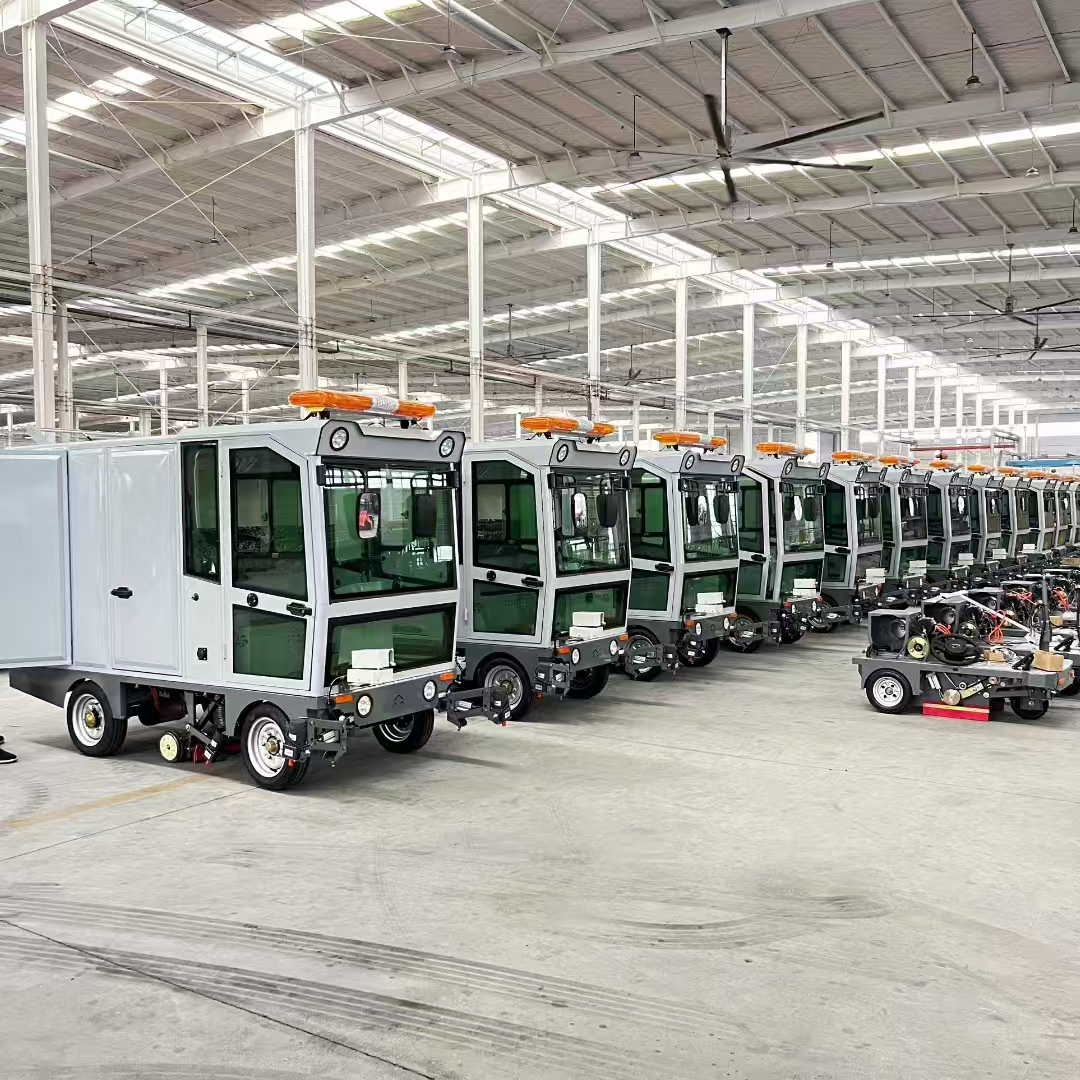
Global Cleaning Equipment, associated with the Sunbon brand, is an industrial and commercial cleaning machine manufacturer with over 13 years of experience, operating from four production bases and an in-house engineering team of more than 20 engineers. Its product range includes road sweepers and other machine classes used by municipal sanitation departments, the audience this comparison addresses. This article draws on that manufacturing background to explain how industrial and street sweeper classes differ.
Industrial Sweeper vs Street Sweeper: What Actually Differs
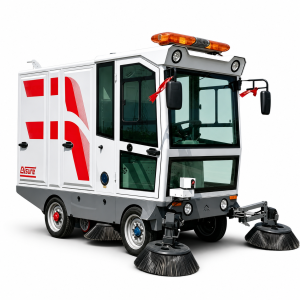
The two classes are built for different duty cycles, and that is the whole comparison. An industrial sweeper is specified for facility grounds, plant yards and parking-lot-adjacent surfaces, where debris is mixed and the machine works a defined area on a repeating schedule. A street sweeper is specified for roadway curb-line work, where the machine travels a linear route, sweeps to a gutter line and often has to meet a municipal street sweeper permit or discharge standard.
That difference in duty cycle drives everything downstream: route geometry, debris type and the regulatory driver behind the purchase. It is also why a search for this comparison is frustrating. The top results are vendor pages built to sell one model, and coverage of route and site fit for roadway programs versus facility-grounds programs is thin.
This guide works through five criteria: route and site fit, MS4 and particulate obligations, total cost of ownership, specification and acceptance testing, and parts and service continuity. It draws on FHWA, EPA and municipal bid documents rather than a test fleet, so where the public record stops, that limit is stated.
Pro Tip: The machine class is set by route geometry, debris type and the regulatory driver, not by brand. Decide those three first, then compare models within the class they point to.
Quick Comparison: Industrial Sweeper vs Street Sweeper at a Glance
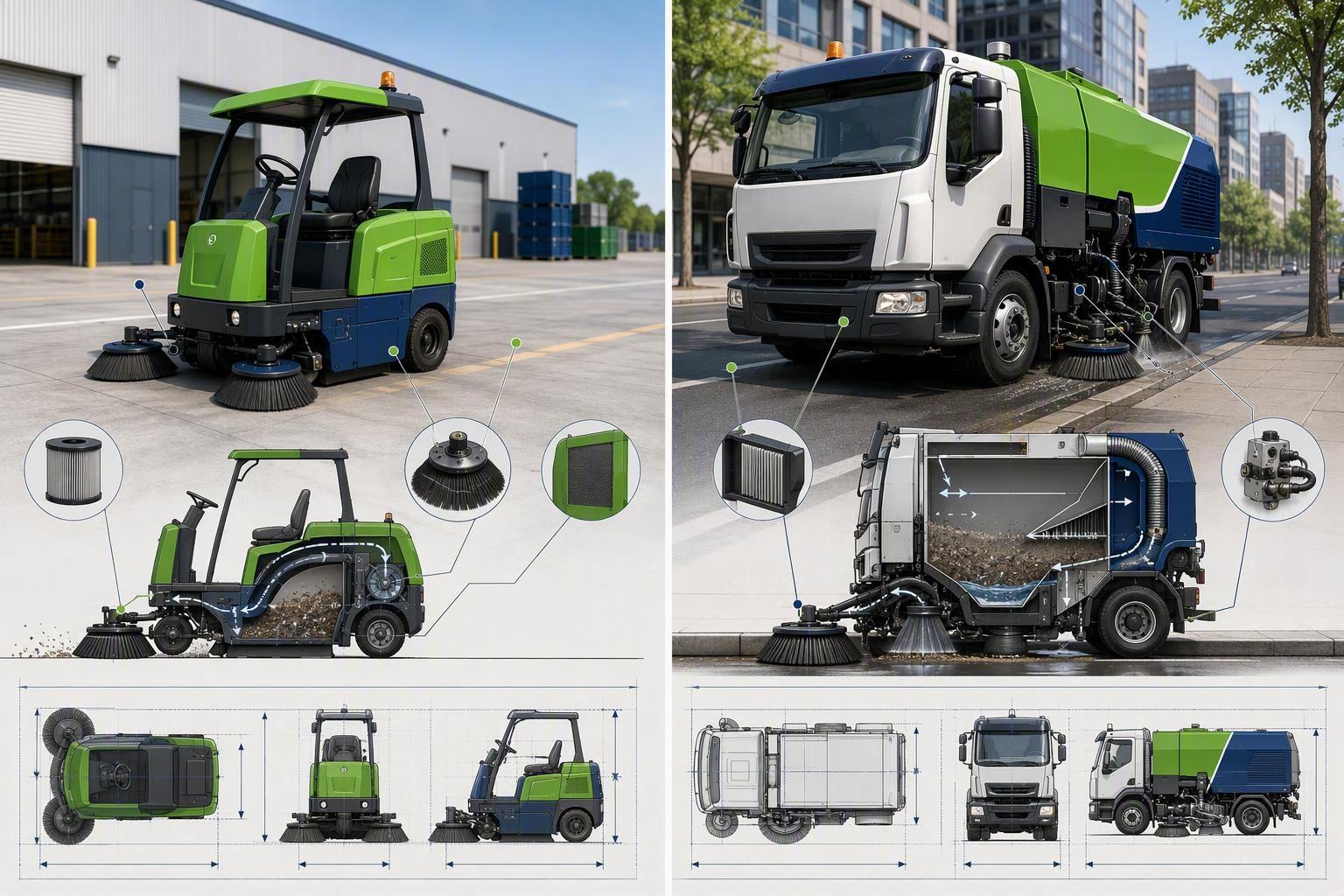
The table below compares the two machine classes on the dimensions a municipal or township buyer writes into a bid. Every row is a specification field, not a rating: the answer depends on your route, your permit conditions, and your maintenance budget, so the cells describe what each class is built to do rather than which one wins.
Specification dimension | Industrial sweeper | Municipal street sweeper |
|---|---|---|
Best-fit route | Confined, paved, privately maintained surfaces: plant aprons, loading yards, warehouse floors, parking structures | Public right-of-way: curb lines, gutters, arterial and residential streets |
Sweep width and turning radius | Narrower sweep path, tight turning radius for racking aisles and doorways | Wider sweep path, larger turning radius suited to lane-width travel |
Hopper capacity and dump cycle | Smaller hopper, frequent dump cycle tied to internal waste handling | Larger hopper, dump cycle set by route length and disposal point access |
Dust-control approach | Onboard filtration and vacuum-assisted pickup for enclosed or dust-sensitive work | Water spray and mechanical pickup, with spray-system freeze protection as a seasonal constraint |
Debris type handled | Fine dust, metal fines, packaging debris, mixed industrial floor litter | Sand, leaves, grit, litter, and heavier gutter sediment |
Typical shift coverage | Coverage measured in facility area per shift | Coverage measured in curb miles per shift |
Regulatory driver | Workplace dust exposure limits and housekeeping obligations | MS4 permit conditions, total maximum daily load targets, and street-sweeping credit reporting |
Procurement route | Capital equipment purchase or lease against a facility maintenance budget | Public bid, often tied to a permit or public-works program, with documented route and disposal records |
Ride-on vs walk-behind sweeper selection sits inside the industrial column: walk-behind units suit tight aisles and short duty cycles, while ride-on units cover larger facility areas per shift. Neither column substitutes for the other on a public route, and the specification vocabulary above is what a bid reviewer will expect to see documented.
Which Machine Class Fits Your Route and Site?
Route geometry decides the machine class before any other criterion. Measure the tightest turn on the collection route, the narrowest aisle or apron the machine must enter, and the distance from the last collection point to the dump site. Those three numbers eliminate more candidates than price does.
The specification dimensions operations and engineering must agree on are sweep width, turning radius, gradeability, aisle and apron clearance, dump-point distance, and shift coverage. Operations signs off on route feasibility; engineering signs off on site constraints such as gate widths, ramp grades, and load limits.
Coverage planning is where vendor guidance and verified data part ways. Brown Equipment, a dealer, puts typical municipal coverage at about 40-60 curb miles per 8-hour shift, depending on debris load, dumping frequency, and route density. Treat that as a vendor-adjacent rule of thumb, not a planning constant: no independent market-wide figure was found, and the range swings widely with debris load.
Class also sets what the machine removes. The FHWA’s documented PM-10 removal rates, a fact sheet aggregating 1990s tests, show mechanical sweepers at -6.7% and 8.6%, regenerative air at 31.4%, vacuum-assisted wet at 40.0% and 82.0%, and vacuum-assisted dry at 99.6%. The negative value means a mechanical broom can redistribute fine particulate rather than remove it.
Which Class Meets Your MS4 and Particulate Obligations?
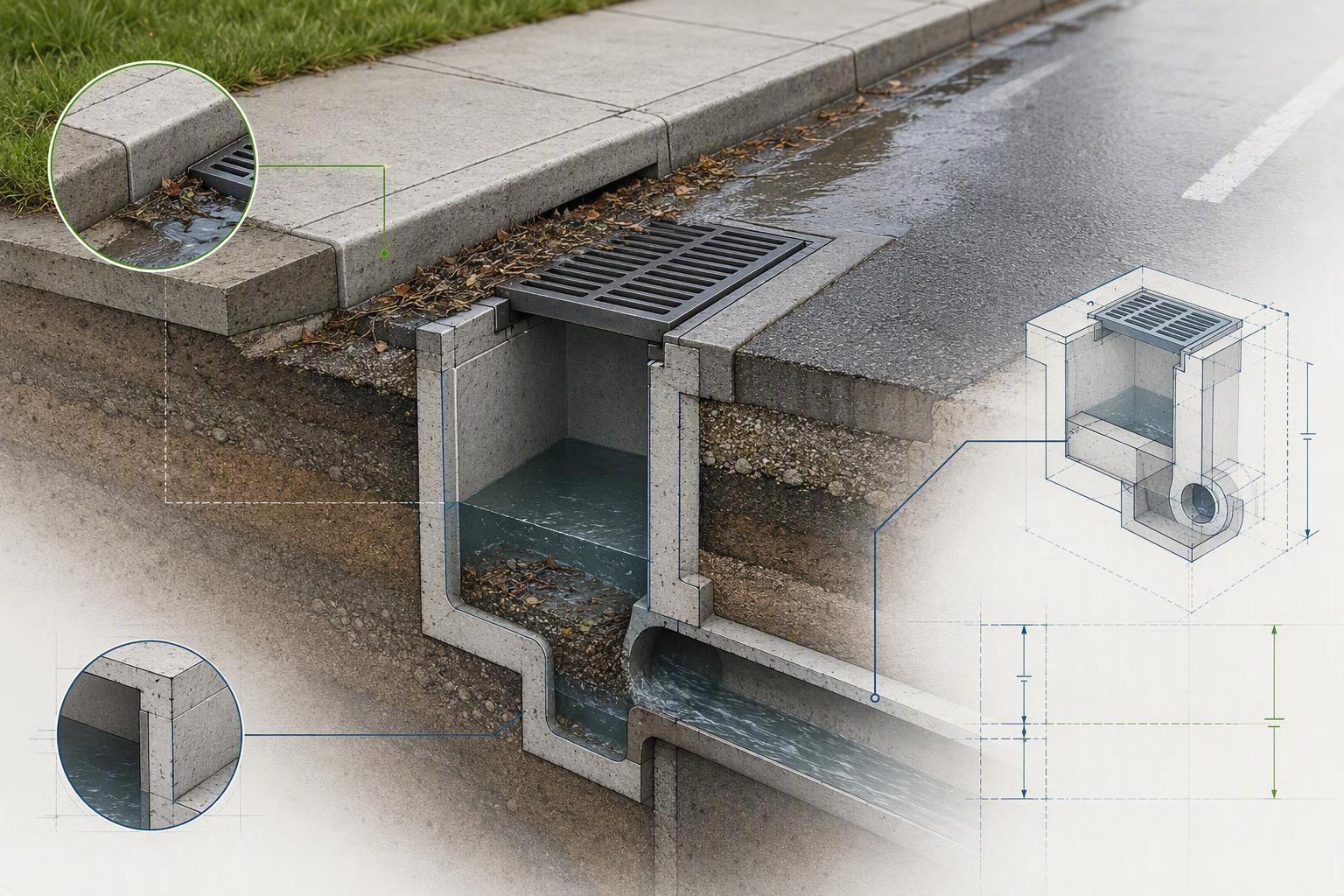
The permit sets the performance floor, not the machine brochure. Under the EPA’s MS4 framework, sweeping is credited as part of the stormwater operations and maintenance program on permittee-owned streets and lots, and the permittee sets the frequencies. There is no universal fixed schedule. What the permit does require is prioritization of debris-accumulating areas and documented records of what was swept, when, and how much material was collected, with an alternative-control route available where sweeping is not feasible (EPA MS4 Trash Compendium, 2021).
Particulate obligations sit alongside that. EPA’s current particulate-matter standards set PM2.5 at 9.0 µg/m³ annual primary (annual mean averaged over three years), 15.0 µg/m³ annual secondary, and 35 µg/m³ over 24 hours (98th percentile averaged over three years); PM10 is 150 µg/m³ over 24 hours, not to be exceeded more than once per year on average over three years (US EPA NAAQS Table, table updated 2025).
Machine class changes what you can claim. FHWA’s comparison of mechanical and vacuum sweepers, drawn from 1992 NVPDC data, reports total solids removal of 55% versus 93%, total phosphorus 40% versus 74%, total nitrogen 42% versus 77%, COD 31% versus 63%, lead 35% versus 76%, and zinc 47% versus 85% (FHWA). Those figures predate current machine generations, so treat them as directional.
How sweeping earns stormwater credit depends on the accounting route: mass-loading (tons removed) or lane/acre swept, both reported annually from measured activity (Minnesota Pollution Control Agency).
How Do You Compare Total Cost of Ownership Across the Service Life?
Acquisition price is the smallest number in the decision. The FHWA’s comparison of mechanical and vacuum sweepers puts conventional sweeper acquisition at $69,000 to $127,000 in 1995 dollars, with the higher end tied to vacuum-assisted and regenerative air machines. Operating cost separates the classes far more sharply: about $70 per hour for conventional sweepers against roughly $35 per hour for vacuum-assisted dry units, both in 1996 dollars. Those figures are decades old and are not converted here, because no inflation source was verified for this research.
Service life runs four to seven years for conventional machines and about eight years for vacuum-assisted dry sweepers, per the same FHWA fact sheet. Build your own model on acquisition, per-hour operation, consumables, fuel or charging, downtime, and residual value at replacement.
Procurement and executive sign-off hinge on one disclosure: no current, market-wide equipment lead-time figure was verified in this research. A 2024 municipal memo citing an estimated 380-day EV sweeper delivery is a single council document, not a market lead time. Treat any lead-time number you are quoted as vendor-specific and ask for it in writing.
How Do You Write the Spec, Test Acceptance, and Keep the Machine Running?
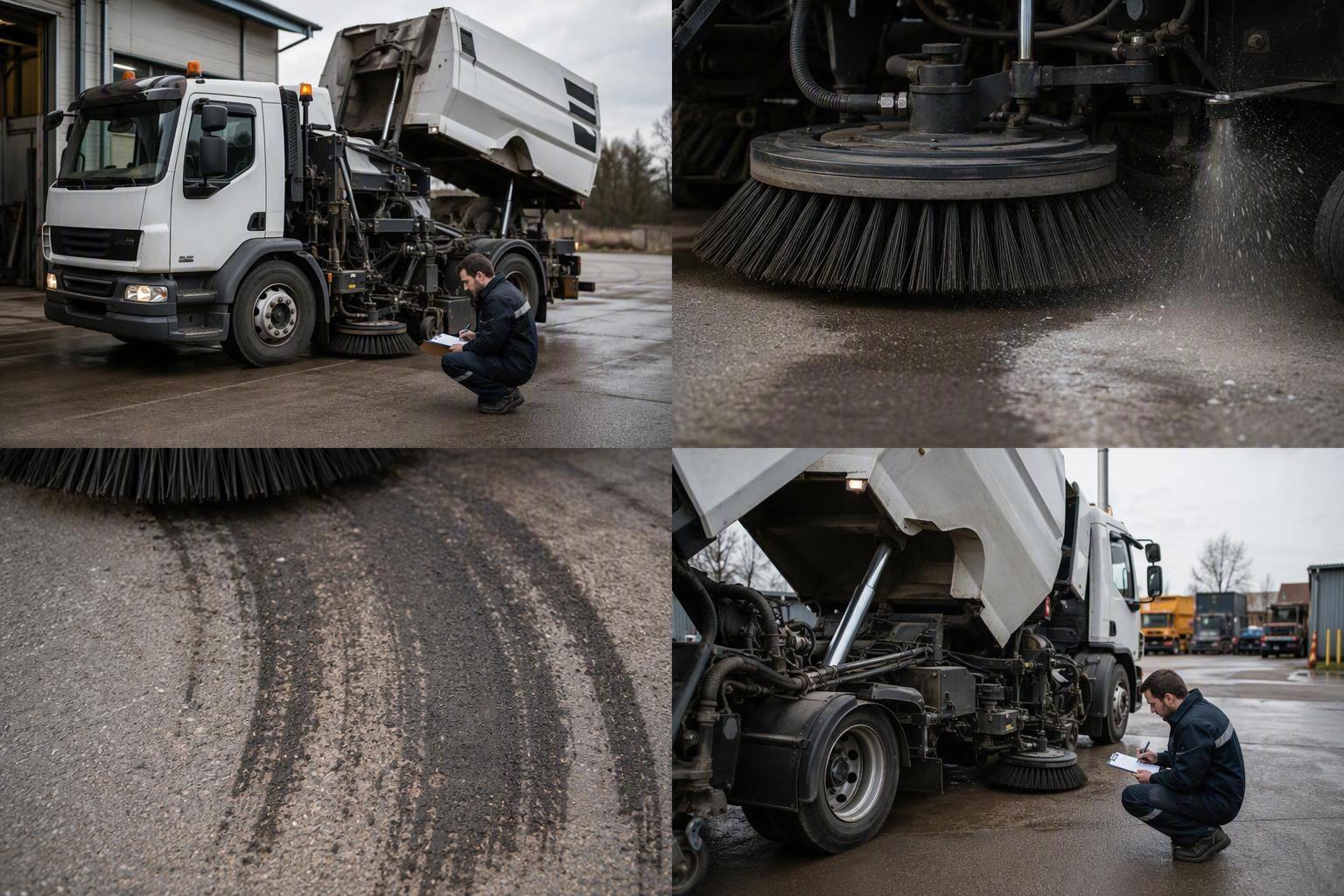
The criteria only matter if they survive the bid document and the warranty period.
Cooperative purchasing lets a public entity buy through an already-solicited contract instead of running its own RFP, and Sourcewell’s solicited sweeper contracts are published for exactly that use (Sourcewell Newsroom, 2022-02-16). The shortcut has limits: GSA’s cooperative purchasing pathway applies only to eligible schedule categories, not to any product a vendor happens to sell (GSA, page dated 2025-11-24).
If you run your own solicitation, write it on performance, capacity and measurable requirements rather than a brand. Published municipal sweeper bid specifications show the pattern: avoid naming a single manufacturer or model, add “or equivalent” where a brand reference is unavoidable, and require a line-by-line compliance matrix so every bidder answers the same questions (Charleston WV bid specs, 2019).
⚠️ Warning: A spec that names one manufacturer without “or equivalent” invites a protest and can force a sole-source justification you did not plan for.
Write acceptance testing and warranty enforceability into the contract: brush contact pattern, hopper dump function, and dust suppression verified against a written checklist before final payment, with the same checklist attached to the warranty terms. Add guaranteed parts availability windows, named regional service points, and whether telematics or fleet-data export is included or licensed separately.
For context on what a manufacturer can be asked to document, Global Cleaning Equipment has built industrial cleaning machines for 13+ years across four production bases, holds CE and ISO 9001 certification, and supports OEM/ODM and factory-direct programs with a one-year warranty plus lifetime maintenance. Those are capability facts to verify in any bid, not performance claims.
Frequently Asked Questions
Can an industrial sweeper replace a street sweeper on a municipal route?
Only where the route allows it. An industrial sweeper is built for contained, hard surfaces such as depot yards, transfer stations, parking structures, and plant aprons. A municipal street sweeper is built for crowned roads, curb lines, and gutter flow. If your route is mostly open roadway with curb miles to pick up, the industrial class will leave material behind and you will still need a street unit. If most of your pickups sit inside fenced sites, the industrial class does the work.
Can a township buy through a cooperative contract instead of running its own RFP?
Often yes, and it is the faster path. Cooperative purchasing vehicles let a township ride an already-competed award rather than duplicate the solicitation. Confirm two things first: that your state or province recognizes the cooperative’s award for this commodity, and that the awarded specification matches your route requirements. If either fails, you run your own solicitation.
What documentation does an MS4 permit expect from a sweeping program?
Permits vary, but the common expectation is a record that ties sweeping to the discharge reduction you claim: routes and frequencies, dates and times of passes, equipment used, and the volume or weight of material removed and how it was disposed of. Keep the log in the same format across the permit term so year-over-year comparisons hold up.
Do the 1990s removal-efficiency figures still apply to current machines?
Treat them as historical context, not a current specification. The widely cited removal-efficiency numbers date to 1992 testing, and no independent test data published since then was found for the current machine generation. Ask bidders for their own test method and results, and hold them to it in acceptance testing.
What if only one manufacturer’s specification fits the bid?
That is a sole-source signal, and it usually means the spec was written around one machine. Rewrite the requirement as a performance outcome (material removed, surface condition after the pass, dust control at the brush) rather than a component description, then let bidders propose how they meet it. You keep the technical bar and restore competition.
Conclusion
Choose the machine class by route geometry and permit obligation first, then let total cost of ownership and procurement mechanics confirm the decision. That order matters because the two constraints are the hardest to reverse: a machine sized for a parking structure cannot be re-specced into a highway shoulder program, and a class that cannot document its particulate control will not survive an MS4 review no matter how favorable its service-life cost looks.
Run the five criteria in sequence. Match the class to your route and site, confirm it satisfies your MS4 and particulate obligations, model total cost of ownership across the full service life rather than the purchase price, then write a specification you can test at acceptance and a warranty you can actually enforce. Where the record is thin, say so in the bid documents instead of filling the gap with an assumption.
For a defensible recommendation to take to council, the strongest position is a specification review before the tender closes. An industrial sweeper manufacturer can walk your draft spec against the criteria above and flag clauses that are ambiguous, untestable, or likely to narrow competition unnecessarily. Talk to an expert or request a specification review while the document is still editable, not after the bids are in.