
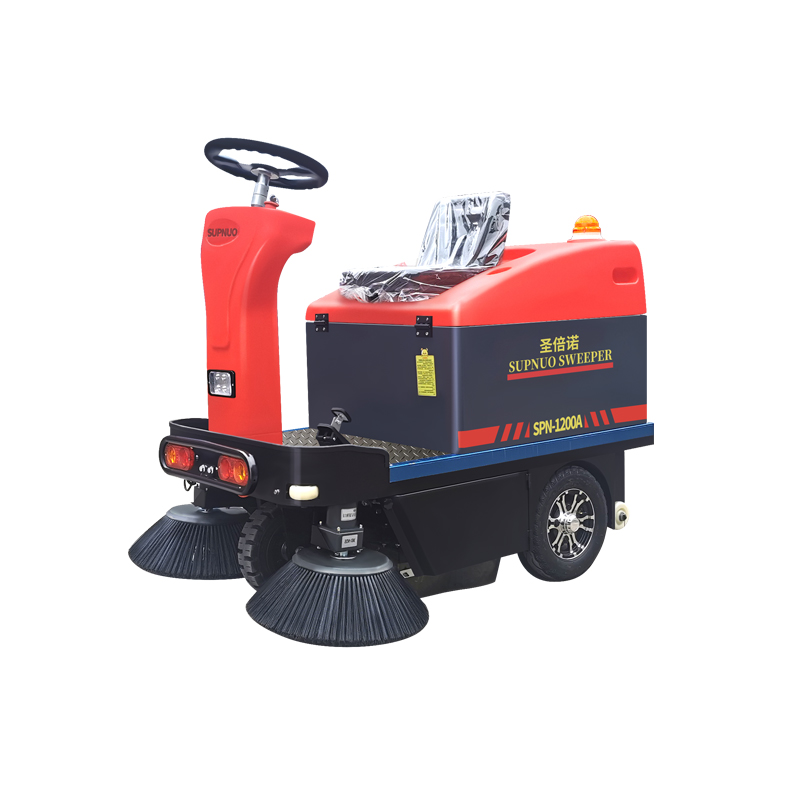
Maintaining clean floor surfaces across large manufacturing plants, assembly halls, and logistics distribution centers is fundamental to operational safety, indoor air quality, and regulatory compliance. Manual push sweeping with push brooms is labor-intensive, slow, and routinely kicks fine particulate dust back into the air where it settles on machinery, finished inventory, and HVAC ducting. Furthermore, legacy engine-powered sweepers bring toxic exhaust emissions and excessive noise into enclosed indoor working environments.
Deploying a high-performance electric sweeper solves these operational challenges by combining heavy-duty mechanical broom sweeping, powerful vacuum dust extraction, and zero-emission battery power. However, choosing the right battery-powered floor sweeper requires evaluating key technical parameters beyond basic price tags or sweeping path width.
This comprehensive buyer’s guide breaks down the essential engineering criteria, battery platform architectures, dust filtration mechanics, and total cost of ownership (TCO) calculations necessary to select the ideal floor sweeper for your industrial facility.
Essential Selection Factors for Industrial Electric Sweepers
Before reviewing specific machinery models, facility management teams must establish three foundational operational metrics: actual square footage per shift, primary debris profile, and physical aisle geometry.
Facility Square Footage and Shift-Based Sizing
Equipment sizing should always be calculated based on the net floor area that requires cleaning during an individual shift, rather than the total gross building footprint. Storage rack footings, fixed machinery lines, and offices reduce the active sweeping space, while high-traffic aisles and loading docks require frequent cleaning passes.
Operational cleaning productivity is calculated using the following engineering formula:
Effective Productivity (m²/h) = Sweeping Path Width (m) × Working Travel Speed (m/h) × Efficiency Factor
In active industrial environments with obstacles, turns, and mixed forklift traffic, the realistic operational efficiency factor ranges between 0.70 and 0.80.
Pro Tip: Always size an electric sweeper to complete the required shift cleaning within 60% to 70% of the operator’s available shift window. This buffers against unexpected debris spills, hopper dumping downtime, and traffic delays.
Debris Profile Matching: From Fine Silica Dust to Wood Pallet Chips
Different industrial debris types demand specific brush configurations, hopper capacities, and filtration mechanics:
Fine Airborne Dust (Concrete, Cement, Powder Coatings): Requires sealed vacuum shrouding, high-efficiency multi-pocket dust filters (5 to 8 m² surface area), and misting dust suppression to prevent filter clogging.
Medium Debris (Metal Shavings, Plastic Pellets, Paper Scraps): Demands high main broom rotational speed, adjustable broom ground pressure (30 to 50 kg), and strong vacuum airflow.
Bulky Heavy Debris (Pallet Wood Chips, Shrink Wrap, Gravel): Requires wide-diameter side brushes, direct-throw sweeping geometry, and large-capacity waste hoppers (120 to 240 liters).
Layout Constraints: Aisle Width, Turning Radius, and Ramp Incline
The physical layout of your facility dictates machine dimensions and maneuvering capabilities:
Narrow Storage Aisles (< 2.0 Meters): Require compact walk-behind electric sweepers capable of zero-radius or tight-pivot turns.
Main Transport Arteries & Wide Bays (> 3.5 Meters): Benefit from high-capacity ride-on electric sweepers operating at travel speeds up to 10–12 km/h.
Ramps and Mezzanine Access: Verify machine gradeability ratings. Standard industrial sweepers feature gradeability specs between 15% and 25% for climbing loading dock plates and inter-building ramps smoothly.
Walk-Behind vs. Ride-On Electric Floor Sweepers
Choosing between a walk-behind or ride-on floor sweeper depends primarily on spatial maneuverability and the hourly area coverage required.
Technical Parameter | Walk-Behind Electric Sweeper | Ride-On Electric Sweeper |
|---|---|---|
Typical Sweeping Width | 700 mm – 1,050 mm | 1,200 mm – 2,000 mm |
Cleaning Productivity | 3,000 – 6,000 m²/h | 12,000 – 20,000+ m²/h |
Recommended Floor Area | 10,000 – 40,000 sq ft | 50,000 – 500,000+ sq ft |
Narrow Aisle Clearance | Fits narrow doorways (< 1.2 m) | Requires main aisles (> 2.0 m) |
Operator Experience | Pedestrian push with power drive | Ergonomic seated driving console |
Waste Hopper Volume | 40 L – 80 L | 120 L – 240 L (High-Dump or Wheelie-Bin) |
Walk-Behind Electric Sweepers
Walk-behind models are ideal for facilities with dense machine layouts, tight assembly corridors, and narrow storage aisles. These units offer exceptional maneuverability around pallet staging areas and allow operators to navigate around obstacles easily. Modern walk-behind sweepers feature electric traction drives, reducing operator fatigue and ensuring steady speed across rough concrete floors.
Ride-On Electric Sweepers
For expansive logistics warehouses, distribution centers, and large assembly plants, ride-on battery sweepers deliver high cleaning output. High-capacity units, such as the SBN-2000BW heavy-duty ride-on electric sweeper, provide a sweeping path up to 2,000 mm and achieve cleaning efficiency exceeding 20,000 m²/h. Seated operator positioning reduces physical strain during multi-hour shifts while driving overall labor productivity.
Key Takeaway: If your facility requires sweeping more than 50,000 square feet daily, upgrading to a ride-on electric sweeper typically recovers its capital investment within 8 to 12 months through labor hour reductions.
Battery Platform Analysis: Maintenance-Free Lithium-Ion vs. Lead-Acid
The battery technology powering an electric floor sweeper impacts shift runtime, maintenance overhead, and total operating expenses over its 5-to-10-year lifespan.
Lead-Acid and AGM Gel Batteries
Historically, industrial cleaning machines relied on flooded lead-acid or sealed AGM battery packs. While offering lower upfront purchasing costs, flooded lead-acid batteries introduce significant ongoing maintenance liabilities:
Watering Overhead: Requires weekly topping with distilled water to prevent plate sulfation.
Strict Charging Protocols: Demands 8 to 10 hours for a full recharge cycle plus additional cooling periods, making multi-shift operation difficult without spare battery swap carts.
Voltage Sag: Power output drops as the battery discharges, reducing broom speed and vacuum suction toward the end of a shift.
Limited Cycle Life: Typically offers 500 to 800 charge cycles before capacity degrades below operational thresholds.
Maintenance-Free Lithium-Ion Battery Technology
Modern commercial floor sweepers increasingly employ high-capacity 48V Lithium-ion battery packs. Leading manufacturers such as Sunbon industrial floor cleaning equipment equip their ride-on sweepers with maintenance-free lithium battery platforms that deliver distinct operational benefits:
Zero Daily Maintenance: No acid refills, no gas venting during charging, and clean indoor operation.
Opportunity Charging Capability: Lithium batteries can be charged during 30-minute lunch breaks or shift changes without memory degradation, enabling continuous 24/7 multi-shift plant coverage.
Sustained Power Output: Delivers constant 48V power throughout the discharge curve, ensuring 100% broom RPM and suction performance until the charge cycle ends.
Extended Cycle Life: Provides 2,000 to 3,000+ full charge cycles, outlasting lead-acid alternatives by 3x to 4x.
Lithium vs. Lead-Acid Lifecycle Comparison (5-Year Operating Horizon)
Maintenance-Free Lithium Flooded Lead-Acid 2,500+ Cycles 700 Cycles Zero Daily Servicing Weekly Distilled Water Fill Opportunity Fast Charge 8-Hour mandatory Cooling 5-Year Single Battery Life 2x Battery Swaps Required
Dust Containment Mechanics: Airflow, Filtration, and Water Suppression
A major performance differentiator among commercial electric sweepers is their ability to control fine airborne dust during sweeping operations. Simple broom sweeping without adequate dust control merely redistributes fine dust particles into the air, violating workplace health and safety standards.
High-performance floor sweepers employ a comprehensive three-stage dust suppression system:
Mechanical Dual Side Brushes & Main Roller Broom: Counter-rotating side brushes sweep corner debris into the central path of the main cylindrical broom, which hurls material directly into the debris hopper.
High-Volume Vacuum Suction & Multi-Pocket Filtration: Heavy-duty vacuum impellers draw airborne dust through pleated cyclone or cartridge dust filters (featuring 5 to 8 m² of total filtration surface area). Integrated electric filter shakers vibrate accumulated dust off the filter membrane into the hopper, maintaining consistent suction power throughout operation.
High-Pressure Water Mist Suppression: Integrated misting nozzles spray a fine water vapor near the side brushes. This atomized mist binds to light dust particles, weighting them down so they are swept cleanly without raising airborne dust clouds.
By maintaining high dust containment standards, plants protect sensitive electronic control cabinets, reduce HVAC filter replacement frequency, and comply with OSHA indoor air quality thresholds.
Maintenance, Serviceability, and Waste Hopper Design
Minimizing equipment downtime requires assessing mechanical service access and waste disposal ergonomics before finalizing a purchase.
Tool-Light Maintenance Access
Daily inspection and routine consumable replacements should not require specialized technician tools. Look for sweeper designs that offer tool-free access to major maintenance points:
Main Broom & Side Brush Removal: Quick-release pins allow operators to clear entangled shrink wrap or swap worn bristles in under 5 minutes.
Filter Inspection Panels: Easy-access shrouds let maintenance teams inspect and clean dust filter elements quickly.
Modular Electronics & Wiring: Color-coded, moisture-sealed wiring harnesses protect against dust intrusion and simplify diagnostic checks.
Reviewing a practical floor sweeper maintenance guide provides facility managers with structured checklists for daily, weekly, and monthly maintenance routines.
Ergonomic Waste Hopper Dumping
Dumping hundreds of pounds of collected floor debris manually poses severe workplace injury risks. Industrial electric sweepers utilize two primary hopper emptying systems:
Hydraulic High-Lift Dumping: Hydraulic arms raise the debris hopper to heights of 1.4 to 1.6 meters, allowing operators to dump waste directly into large commercial trash dumpsters without leaving the driver’s seat.
Standardized Wheelie Bin Integration: Models like the SBN-2000BW feature removable 240-liter standard rolling trash bins mounted on rolling casters. Operators can roll the bin directly to waste staging areas for effortless dumping.
Evaluating Total Cost of Ownership (TCO) and ROI
Evaluating an electric sweeper solely on its initial purchase price ignores 80% of its total lifecycle operating cost. A robust Total Cost of Ownership (TCO) calculation factors in labor savings, energy efficiency, consumable replacement schedules, and uptime reliability.
5-Year TCO Breakdown Matrix
Total Cost of Ownership = Capital Purchase Price + Energy Costs + Consumable Maintenance + Labor Overhead - Residual Equipment Value
Labor Savings Calculation Example | Detail |
|---|---|
Facility Footprint | 100,000 sq ft |
Manual Push Sweeping | 10 Hours / Day @ $25/hr Labor Rate = $250 / Day ($75,000 / Year) |
Ride-On Electric Sweeper (15,000 m²/h) | 1.0 Hour / Day @ $25/hr Labor Rate = $25 / Day ($7,500 / Year) |
Annual Direct Labor Savings | $67,500 |
Warning: Avoid low-cost sweepers that utilize proprietary, non-standard electronic control boards or obscure replacement broom sizes. High replacement part prices and long shipping lead times can quickly erase initial purchase discounts.
Utilizing a structured warehouse floor sweeper selection framework ensures procurement teams verify vendor warranty coverage, spare parts availability, and factory technical support responsiveness before placing orders.
Procurement Checklist for Plant Managers
Before issuing a purchase order for an industrial electric floor sweeper, confirm the following technical checklist with your supplier:
Facility Fit: Does the sweeping path match your narrowest aisle, doorway clearance, and dock ramp inclines?
Shift Runtime: Does the battery platform (Lithium-ion vs. Lead-acid) support your required cleaning window and shift schedule without mandatory downtime?
Debris Capability: Has the machine demonstrated effective pickup on your facility’s specific debris profile (dust, pellets, wood chips, metal shavings)?
Dust Control: Does the filtration system feature adequate surface area (≥ 5 m²), automatic filter shaking, and water mist suppression?
Consumable Access: Can main brooms, side brushes, and dust filters be inspected or replaced tool-free in under 10 minutes?
Factory Support: Does the OEM provide ISO9001/CE quality certifications, transparent spare parts pricing, and long-term technical support warranties?
Frequently Asked Questions (FAQ)
What is the difference between an electric floor sweeper and an electric floor scrubber?
An electric sweeper is designed for dry debris collection, sweeping up dust, dirt, gravel, wood chips, and paper scraps using rotating brushes and vacuum filtration. An electric scrubber uses water, chemical cleaning solutions, and scrubbing pads to scrub and dry wet, greasy, or stained floor surfaces. Most industrial facilities use sweepers for daily dust control and scrubbers for periodic deep wet cleaning.
How long does a battery last on an electric industrial sweeper?
Industrial electric sweepers equipped with 48V maintenance-free lithium-ion battery platforms typically provide 4 to 6+ hours of continuous operational runtime per charge. Because lithium batteries support fast opportunity charging, operators can top off the charge during lunch breaks or shift transitions to achieve continuous multi-shift coverage.
Can an electric sweeper operate outdoors in parking lots or loading docks?
Yes. Industrial-grade electric sweepers are engineered for both indoor manufacturing floors and outdoor paved surfaces, including asphalt parking lots, dock aprons, and outdoor storage yards. Misting dust suppression and rugged pneumatic tires ensure effective sweeping across uneven outdoor concrete and asphalt.
How often do main brooms and side brushes need to be replaced?
Consumable brush lifespan depends on floor surface roughness, broom pressure settings, and daily operating hours. Under normal concrete warehouse conditions, high-density polypropylene main brooms typically last between 300 and 500 operating hours before replacement is required.
Next Steps
Selecting the right battery-powered floor sweeper transforms facility cleanliness, protects worker health, and significantly reduces ongoing janitorial labor expenses.
To determine the ideal sweeper configuration for your plant, explore Sunbon industrial floor cleaning equipment or request a custom facility floor assessment to calculate your exact equipment payback period and cleaning ROI.





