
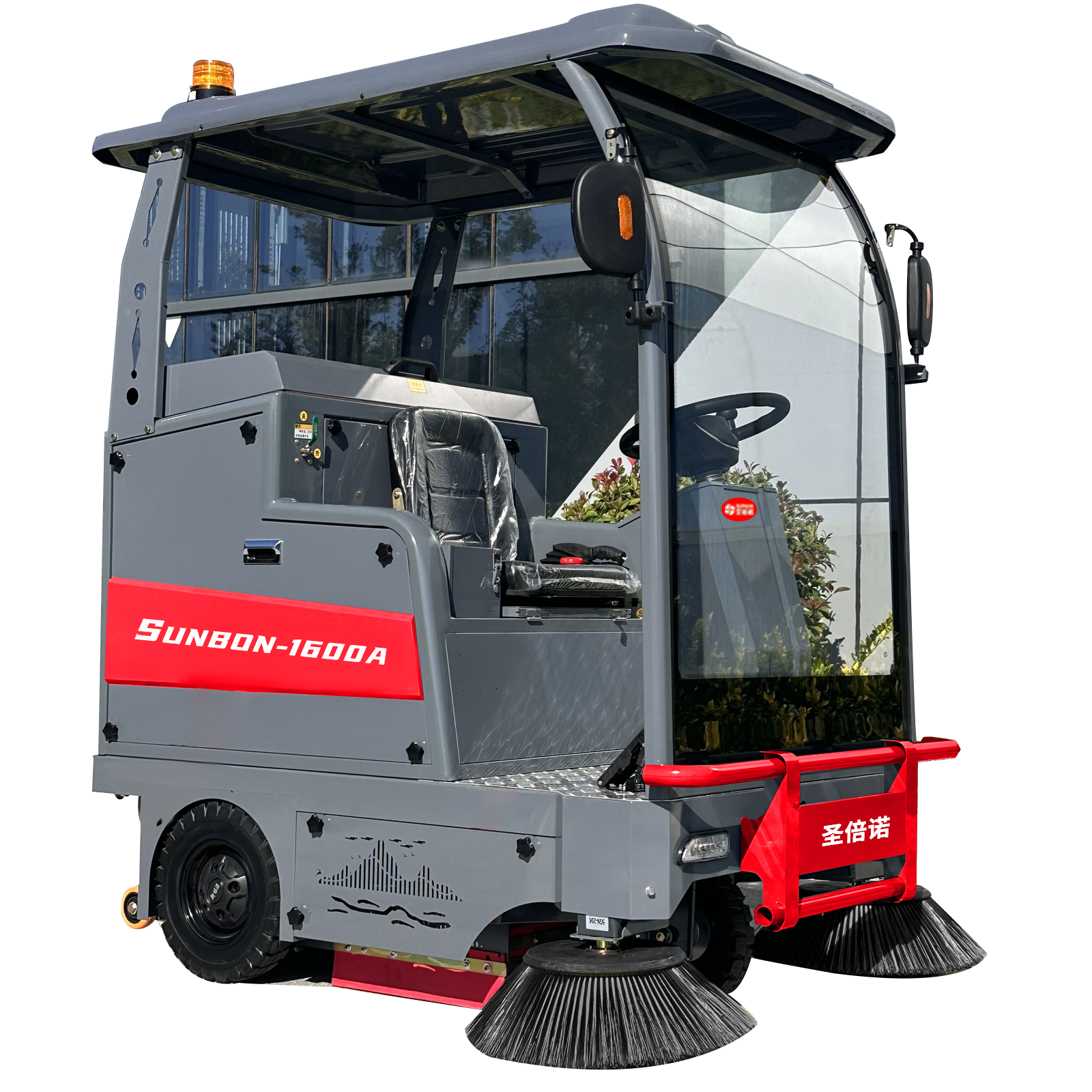
If you’re seeing dust trails along forklift lanes, debris building up under racking, or slip hazards near dock doors, you don’t have a “cleaning” problem—you have an operations risk.
A ride-on sweeper is often the fastest way to reduce that risk across large areas without burning labor hours. But it’s also easy to buy the wrong machine: too big for your aisles, under-filtered for your dust, or mismatched to your charging window.
This buyer’s guide is written for manufacturing plants and warehouses. It’ll help you do a quick needs assessment, understand the major sweeper types, and build a shortlist of evaluation criteria you can use with any vendor.
Quick decision table: what matters most for your site
Use this as a first-pass filter before you compare brands.
Your reality on the floor | Prioritize | Why it matters | What to ask vendors |
|---|---|---|---|
Fine dust, visible haze, or dust that ends up back on shelves | Filtration + dust control | Dust control is the difference between “looks clean” and “stays clean” | Filter type, filter area, auto-cleaning method, dust suppression/misting options |
Packaging scraps, pallet chips, leaves/sand at doors | Brush aggressiveness + hopper capacity | Bigger debris loads can overwhelm small hoppers and light brush systems | Main broom type, side brooms, hopper volume and dump method |
Tight aisles, many turns, congested pick zones | Maneuverability | A wide machine that can’t turn wastes time and causes damage | Turning radius, machine width, edge cleaning ability |
Short off-shift cleaning windows | Productivity + uptime | You’re buying time back, not just “a machine” | Claimed area coverage, runtime per charge, swap/charge strategy |
Multi-site rollout | Standardization + serviceability | Training and parts availability make or break fleet uptime | PM schedule, consumables lead time, service model, warranty terms |
Pro Tip: Before you look at model brochures, map one “typical route” in your facility (start point → choke points → turns → debris hotspots → dump point → charging spot). The best spec sheet in the world won’t fix a route that doesn’t work.
Ride on sweeper vs walk-behind: a quick rule of thumb
If your sweeping routes are long, open runs and operator walking time is turning into a labor cost, a ride on sweeper usually pays off. If your routes are mostly tight aisles, obstacle-heavy zones, or short stop-and-go paths, a walk-behind (or a smaller unit) often performs better day-to-day.
This “walk-behind vs ride-on sweeper” decision gets easier once you map your longest route and your narrowest aisle.
As a simple benchmark, Tennant notes walk-behind sweepers are often a fit for spaces under about 4,000 sq ft, with ride-on sweepers designed for larger facilities like warehouses and manufacturing (see Tennant’s guide to understanding commercial floor sweepers).
If you’re running a large facility and want a second input, IPC also frames the choice based on area size, frequency, and desired productivity in its ride-on vs walk-behind sweeper guidance.
What a ride-on sweeper is (and what it isn’t)
A ride-on sweeper is a powered machine the operator drives while seated. It picks up dry debris—dust, grit, packaging scraps—using a combination of brushes (to pull debris in) and a vacuum/filtration system (to contain fine particles). Many models also use dust suppression (such as misting) to reduce airborne dust.
What it isn’t: a floor scrubber.
Use a sweeper when your issue is dry debris and dust.
Use a scrubber when your issue is soil films, oily residues, sticky marks, or anything that needs washing and drying.
A lot of facilities end up needing both—but not necessarily in the same machine.
Step 1: Do a 15-minute needs assessment before you shop
If you only do one thing from this guide, do this. It turns “we need a sweeper” into a spec that vendors can quote accurately.
1) Document your debris profile
Write down the top 3 debris types you deal with most often:
Fine dust (powder, sawdust, process dust)
Grit/sand tracked in at doors
Packaging scraps (plastic wrap, strapping fragments)
Wood chips/pallet debris
Metal shavings (if applicable)
Why: the debris type drives filtration requirements, brush style, and hopper size.
If you’re sourcing an industrial ride-on sweeper for a warehouse or plant, this step also helps you decide whether you need a direct-throw system, stronger vacuum pickup, or added dust suppression.
2) Measure your geometry (don’t guess)
You don’t need CAD drawings—just three measurements:
Narrowest aisle width where you expect the machine to run
Tightest turning spot (end of aisle, around a column, near staging)
Doorways/elevators/ramps the unit must pass through
Why: the “wrong size” mistake isn’t subtle. It becomes daily lost time (and occasional rack damage).
3) Confirm your operating window and staffing reality
How many minutes can you clean without disrupting production/picking?
How many operators will actually use this machine (and how often do they change)?
Is daytime cleaning required (noise-sensitive) or is it all off-shift?
Why: a great machine that’s hard to train or too loud for occupied hours won’t get used.
4) Note any EHS constraints around dust
If you’re dealing with dust that could contain silica or other hazardous particulate, housekeeping methods matter.
OSHA’s general industry silica standard limits dry sweeping/dry brushing where it could contribute to employee exposure, unless wet sweeping, HEPA-filtered vacuuming, or other exposure-minimizing methods aren’t feasible (see OSHA 29 CFR 1910.1053 housekeeping requirements).
This isn’t a legal memo—but it’s a strong reason to evaluate dust containment and filtration early, not as an afterthought.
Step 2: Dust control and filtration (where many purchases go wrong)
In manufacturing, “sweeping” can fail in two ways:
It doesn’t pick up enough debris.
It picks up debris… and then throws fine dust back into the air.
When fine dust is part of your reality, filtration is not a feature—it’s the system.
Here’s what to evaluate:
Filtration approach and maintenance
Ask vendors:
What filter type is used (cartridge, panel, HEPA option)?
What’s the filter surface area?
How is the filter cleaned (manual shaker, automatic, pulse-jet)?
How often does the filter need cleaning or replacement in real-world use?
If you can’t get clear answers, that’s a red flag.
Dust suppression (misting/spraying)
Some manufacturers emphasize multi-stage dust control and misting systems for better air quality during sweeping. For example, Nilfisk highlights its DustClear™ multi-stage dust-control approach and notes selection factors like debris handling and maneuverability in its ride-on sweeper selection guidance.
You don’t need a branded system name—you need a measurable outcome: less airborne dust, less “haze,” and less re-settling.
⚠️ Warning: If your team “sweeps” and the air looks worse afterward, you may be trading a housekeeping task for a respiratory exposure issue. Evaluate filtration and dust containment before you evaluate speed.
Step 3: Productivity isn’t just cleaning width—it’s your whole cycle
Ride-on sweepers look impressive in a demo because they cover a lot of ground quickly. The operational question is whether they can do it reliably in your cycle:
Run time → debris pickup → hopper fill → dumping → back to route → end-of-shift charging
Cleaning path and real throughput
Bigger cleaning paths can increase throughput in open spaces, but only if the layout supports it.
Use vendor claims as a starting point, then reality-check:
Can the operator maintain that speed with traffic, turns, and congestion?
Will the machine still pick up debris at speed—or will it skip heavier materials?
Hopper capacity and dump logistics
A hopper that’s too small creates a hidden tax: stops.
Ask:
Hopper volume (and whether it’s measured as usable volume)
How the hopper is emptied (manual dump, high-dump, removable bins)
Where the dumping point will be located and how long it takes to reach it
If dumping requires leaving the route and navigating across traffic lanes, you’ve created a safety and productivity problem at once.
Step 4: Maneuverability and site geometry
In warehouses, your slowest moments aren’t on straight runs—they’re at:
end-of-aisle turns
pinch points near staging
around columns and dock door approaches
Tennant’s overview notes that walk-behind sweepers are often ideal in smaller or tighter spaces (it cites spaces under about 4,000 square feet as a typical walk-behind fit), while ride-on sweepers are designed for larger sites such as warehouses and manufacturing facilities.
For manufacturing ops, the “right” answer is often hybrid:
a ride-on sweeper for open runs
a walk-behind (or smaller unit) for tight pick zones and constrained routes
If you’re specifically deciding ride-on sweeper for warehouse use, start with your narrowest aisles and your longest continuous routes—those two facts usually decide the category.
What to measure and confirm
Minimum aisle width your routes require
Turning radius (not just “compact” on the brochure)
Edge cleaning performance (side broom reach)
Visibility and sightlines for forklift/pedestrian environments
Step 5: Power and charging strategy (battery vs fuel, lithium vs lead-acid)
Most indoor manufacturing facilities prefer battery-powered sweepers to avoid emissions and reduce noise.
What matters is less about the battery chemistry label and more about the operating model:
Can you finish your route inside your cleaning window?
Can you charge in the time you actually have?
Do you have a safe, practical charging location?
Battery vs fuel (practical view)
Battery: quieter, indoor-friendly, but you must manage runtime and charging.
Fuel/ICE: can be suitable outdoors or very heavy-duty applications, but emissions/noise typically limit indoor use.
Lithium vs lead-acid (how to think about it)
Your ICP reality (multi-site ops) usually makes three points non-negotiable:
Safety and policy compliance: charging areas, training, and manufacturer-approved chargers.
Charging logistics: opportunity charging vs overnight charging.
Maintenance burden: who owns battery care?
If you’re considering lithium, expect objections and questions (battery safety, compatibility, replacement cost). Build the decision around documented safety practices and vendor support, not marketing claims.
Step 6: Durability, maintenance, and serviceability (the real TCO drivers)
A sweeper that saves labor for six months and then becomes a downtime machine is not a win.
Evaluate:
Consumables and maintenance tasks
Main broom and side broom replacement intervals
Filter cleaning and replacement intervals
Ease of access to routine service points
Whether the design is modular (faster repairs)
Service model and parts availability
For multi-site operations, service response and parts lead times matter as much as specs.
At minimum, require:
a clear warranty statement
what’s excluded (normal wear items)
how technical support works (remote, on-site, distributor)
As an example of what “clear” looks like, SUNBON states a one-year warranty and remote support options on its product pages (see SBN-2200AW ride-on sweeper details).
What to ask for in a demo (and how to compare quotes)
Most demos are too easy: clean, open floor, ideal debris, no traffic.
Ask vendors to demo on your hardest reality:
Demo request checklist
Run the machine in your tightest aisle/end-of-aisle turn
Sweep your actual debris mix (including fine dust if relevant)
Show dust control behavior behind the machine (haze, re-settling)
Empty the hopper the way your team will actually do it
Demonstrate filter access/cleaning
Demonstrate the charging workflow and required infrastructure
Quote comparison checklist (copy/paste)
When you compare quotes, insist each quote lists:
Machine configuration and included accessories
Filtration level and any dust-control options
Battery type/capacity and charger model
Consumables list + expected replacement cadence
Warranty terms and response process
Spare parts lead time and local support coverage
Training included (initial + refresher)
Pro Tip: If a vendor can’t define the consumables and maintenance expectations in plain English, you’re not getting a reliable TCO picture.
Examples of ride-on sweeper configurations (optional reference)
If you want a concrete starting point, SUNBON provides several ride-on sweeper configurations you can use as examples when comparing specs:
SUNBON (brand overview and product range)
Wide-area productivity claims and lithium positioning on the SBN-25000AW industrial ride-on sweeper specs
Large cleaning width and debris capacity positioning on the SBN-2450CX pure suction ride-on sweeper specifications
Keep in mind: vendor specs are useful for comparison, but your demo and your route constraints should be the final decision-makers.
FAQ
How do I know if I need a ride-on sweeper or a walk-behind?
If your routes are mostly open runs and you’re spending meaningful labor hours walking long distances, a ride-on is usually the right direction. If your cleaning is mostly narrow aisles and obstacle-heavy zones, a walk-behind can be the better tool—or you may need both. Tennant’s overview uses under ~4,000 sq ft as a typical walk-behind fit and positions ride-on sweepers for larger facilities like manufacturing and logistics.
Do I need HEPA filtration?
Not always. But if fine dust is a major issue—or if your housekeeping program must minimize airborne dust—filtration becomes a top-tier evaluation criterion. At minimum, ask vendors to explain the filtration system, how it’s cleaned, and what dust-control options are available.
Can a ride-on sweeper replace manual sweeping completely?
In large areas, often yes for routine debris pickup—especially if the machine fits your layout and has enough hopper capacity. But most plants still keep manual tools for corners, under-machinery areas, and immediate spill response.
What’s the biggest buying mistake?
Buying on cleaning width alone. If the unit can’t turn in your aisles, can’t control dust for your environment, or can’t be charged inside your real operating window, it won’t deliver the ROI you expected.
Next steps
Run the 15-minute needs assessment above.
Turn it into a one-page “demo script” and use it with 2–3 vendors.
Compare quotes using the checklist so you’re evaluating total lifecycle fit—not just the machine price.
If you’d like, you can share your aisle widths, debris types, and cleaning window, and we’ll help you narrow down a ride-on sweeper configuration that fits your facility constraints.





